New Paragraph

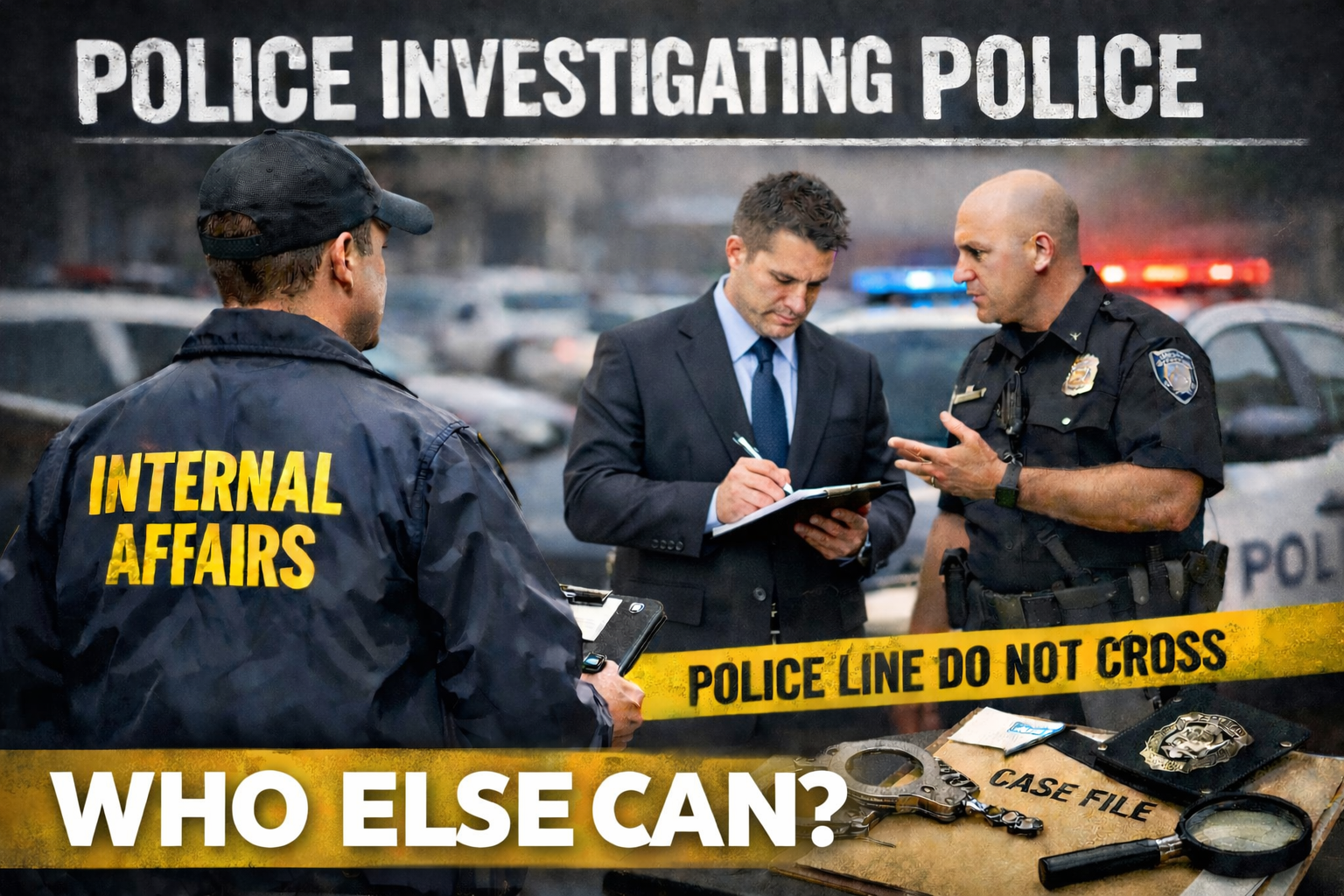
Police corruption arrests: How do we move on from here?
February 7, 2026

Thursday’s announcement of the arrest of seven serving and one retired Toronto police officers for corruption, was a dark moment for policing in Canada and for the communities that trust their police to always do what is honest and right. At times like this it is too easy for us all to lose trust in those in which we should hold the highest level of trust in society, because of the actions of a few. I believe that we must remind ourselves about all that is good in policing in Canada – where training, standards, equipment, professionalism, governance and competence are second to none in the world. 


I view this as both bad news and good news stories.


The bad news is that seven officers allegedly broke their oaths and committed heinous crimes. Startling, sad and completely unacceptable for the profession and more importantly for the public they were sworn to serve.


The “good” news (although I struggle with the word) is that the system worked. Suspicions arose about a certain Toronto Police (TPS) officer’s potential involvement in a crime in York Region. Police there notified the Chief of the TPS, and they quickly agreed that York Regional Police (YRP) would lead the investigation, and TPS would remain in a support role by providing Professional Standards investigators and other assistance as required. I assume that would mean investigative support personnel and access to internal information about the TPS officers in question, like their schedules; what police cars they were driving; assignments and personnel file information, at minimum. By design, the TPS Chief did not have decision-making authority in the investigation. 


None of that raises any red flags for me. 


This was a large and complex investigation that eventually involved 400 officers and would require highly experienced investigators and specialty personnel. YRP and TPS have all of that and more. The leaders that addressed the media spoke competently and professionally, leaving no doubt that they would leave no stone unturned. 


Evidence was gathered and arrests of officers and others were made. The public was then appropriately advised of as many details as we have ever seen released in a media conference when charges were before the courts and an investigation ongoing. TPS Chief Demkiw announced he was seeking to suspend at least some of the officers without pay. That is something that has only recently became acceptable under Ontario’s policing regulations and must be used judiciously.


Of course, social media “experts” and anti-police pundits took over from there. Please allow me to offer answers to some of the most consistent queries: 


Why wasn’t an independent oversight body like the Special Investigations Unit (SIU) brought on to investigate? Police shouldn’t investigate police! 


It’s not the legislated mandate of the SIU to conduct criminal investigations into police except in specific circumstances around police use of force or sexual assault. Nor is it the mandate of Ontario’s Inspectorate of Policing. These governing bodies do not possess the expertise or resources to conduct massive criminal investigations into officers and organized crime groups. Only large police services have the critical mass and knowledge to manage such difficult operations.


An option for Chief Demkiw was to let his Professional Standards personnel be the liaison for TPS information and potential Police Act charges against TPS personnel that might emerge but leave the investigative support/assistance piece to another large outside service. That would’ve helped suppress any concern around TPS investigating their own. But police services often conduct criminal investigations into their own people with regularity in Ontario, unless they involve senior officers. There’s no hard and fast rule or Ministry guidelines on the issue to my knowledge.


The Toronto Chief should step down. This happened under his watch.


I cannot speak to his day-to-day job performance, but in my view, Chief Demkiw did not handle this case wrongly. The alleged illegal actions of 0.12% of his police personnel do not justify his removal. If he knew and didn’t take action that would be different but there is no suggestion of him doing anything but throwing his full support behind the YRP investigation. Again, perhaps he should’ve kept TPS out of it as much as possible, but that was a judgement call made in the early stages of an investigation that grew very large over time.


All cops are corrupt. Why didn’t other officers stop them?


What? This was seven officers in a police service of almost 6000 TPS officers and out of over 70,000 police officers in Canada. It is awful, without a doubt and concerning to say the least, but this does not mean there is a wave of police corruption and ties to organized crime across the nation. As this criminality unfolded and as we speak, thousands of officers are on the streets of Canada, saving lives and risking their own; patrolling communities; preventing crime and victimization; responding to life and death situations; arresting evil criminals and more. They do that professionally, bravely and honestly, or they are held to account under various laws and disciplinary processes. They are governed and regulated more than any other profession in Canada. 


Yes, some cops (even one is too many) out of those 70,000, commit crimes in their careers, which is unacceptable. Some of that occurs while they are on duty, some not. It is disappointing when it happens, but with rare exception police leaders will not accept it and will deal with it expeditiously through due process. In cases where a police supervisor or executive doesn’t take proper action, they will be held to account as well. 


As a rule, no one hates dirty cops more than honest cops. They hurt the profession as a whole across the continent. Canadian officers take a reputational hit regardless of where the wrongdoing occurs in North America. 


We don’t know the details yet of what these accused officers were doing or how much of it they were doing on the job, versus off duty. IF evidence comes to light in the ongoing investigation that colleague officers knew or participated in any way in the criminality, they will be in trouble as well. Let’s not jump to conclusions that other officers “must have known” and let the investigation run its course.


Why do officers not have more oversight on the use of police databases?


Police officers and a number of civilian colleagues have access to the Ministry of Transportation (MTO) database that holds all licenced driver and vehicle registration information in Ontario. Most police cars have computers in them that can access that information, which includes driver’s and owners’ addresses. It is accessed non-stop, 24/7, as a regular part of core police business. Other databases involving outstanding warrants and criminal history, as well as occurrence records are similarly accessed. 


Government employees that work at MTO or in some other Ministries have like access to people’s names and addresses. That is reality in all 10 provinces. We cannot limit legitimate government employee access to vital systems on the off chance they may be inappropriately used. That includes those that we entrust to carry guns and make life and death decisions. When such databases are misused in some way, proper action must be taken promptly, as it was in this case, as opposed to hamstringing the operability of several hundred thousand honest employees across Canada.


Canadian police officers are internationally highly-regarded, but they are human, have frailties and will honestly err on occasion while truly trying to do their best. That can be dealt with and repaired when it occurs. But when officers commit acts of malice, they will be appropriately held accountable and dealt with through due process. That is the bedrock of Canadian policing. 


Public trust in police is paramount to effective policing, and largely we enjoy that in our country. We cannot let this dark day define what policing actually is in Toronto or anywhere in Canada. Canadians should move forward with confidence that the system did work in this case. Those that violated our trust are before the courts. The vast, vast majority of officers that are still out there bravely doing what they do so well, will never let us down. Please give them a chance. 

By Chris Lewis March 28, 2026
Leadership is inundated with risk, every hour of every day, in all sectors. In policing, legislative authorities and established policy are the ever-present guideposts, but occasionally policy just doesn’t apply. At times someone has to just make a decision to do something, or not, or they will fail the public they serve and the personnel it is their duty to lead. If it goes bad, time to own up, do damage control, learn from it and move forward. It always frightened me when I saw some at the senior executive level in policing think that supervisors and managers operate in a pristine little bubble where nothing should ever go wrong. Then when it did because some supervisor tried their best to make something work for all the right reasons, they wanted to pigeon-hole the person that took the risk. There were times during my own career when executives were not encouraged to take any risk either. In fact, taking risk was career risk in itself. Despite the best of intentions, if it went bad, the one ‘responsible’ be forever labelled as having failed. Even if the gamble went well, the jaundiced eyes from above would still forever look at them as being a potential liability. It became the “Oh, him. He’s the one that...” At times the daily decision making of high-level commanders would be second-guessed by those in the executive suites – some of whom had never really commanded anything. My buddy retired Chief Wayne Frechette used to describe these folks as: “They’ve never been out after dark on company time.” I know this same concept was alive in many other police services. Some at executive levels actually did serve in operational roles at some point but they never took a risk. Somehow, they were fortunate to skate through difficult situations through sheer luck as opposed to good decision-making and never developed any scar tissue along the way. They didn’t learn from failure – they survived by luck. They also were viewed by weak executives above them as being golden because there was never a milli-second of negativity around them. They were Teflon. But those that worked under their “command” (for lack of a better word) had no respect for them. They simply watched them walk around with coffee in hand, never leaving the office or making a decision. It wasn’t leadership, but it did pave the way to stardom from on high, for some. True leaders do take risks at times. Many I worked with and for did it all and did it well. They did so in the best interests of those they served and those they led, because it wasn’t about themselves, but was done in the service of those that placed their trust in them. Policy simply doesn’t fit every situation. It is most often a guide that anticipates most circumstances that employees will face, particularly the more common (high-frequency) ones. But it cannot predict every possible scenario. When that happens in policing, it can occur in very unlikely situations (low-frequency) that are incredibly high-risk. Supervisors cannot say “Sorry folks, the book doesn’t cover this one” and run away crying. They also don’t have time to tell bad guys, “Hey big fella, sit tight. We need to take a pause here and get the whiteboard out so we can have a group-think about how to stop your murderous rampage.” I think that many pseudo-leaders – far too many, are afraid to make risky decisions out of fear that an error will jeopardize their career. Instead, they risk their careers by not making decisions. Or as I like to say: “their fear of career-risk, risks their careers.” This can be fatal in the policing world. When a police supervisor shirks their responsibilities or quivers, sucks their thumb, and prays for the situation to go away, thankfully constables will come forward and do their best to get their teammates through it. Sometimes that ends well and when the supervisor emerges from their fear-induced coma, they will more often than not take credit for the success. But when the situation goes to hell-in-a-handbasket – despite best efforts, the pseudo-leader will document the risk-taking employee and add another bullet-point to their list of things they’ve done to “hold people accountable.” The panel at their next promotional interview will likely hear the false rendition proudly told. I hear examples of this practise from serving police officers across North America on a much too frequent basis. True leaders develop a culture of trust among those they lead that their suggestions and feedback are encouraged and valued. Their confidence that the leader wants their input encourages them to constantly analyze situations and give thought to what policy says and the options available when policy says nothing. That is good for the employee’s development and may save the leader’s hind-end and the continuity of the team on occasion when an employee steps forward in a crisis. Having said that, there will clearly be situations where there isn’t time for the whiteboard, and a decision needs to be made by the responsible “leader.” When it doesn’t work out, the real leader will step forward and be accountable. But when it does go well, the true leader will allow the light to shine on the team they have the honour to lead. In my view, we’re not seeing enough of that in North American policing. We need more genuine leaders at all levels of law enforcement organizations. Developing and promoting real leaders that can manage risk effectively is a must. Anything less fails everyone.
By Chris Lewis March 26, 2026
They used to be simply a "nice to have."
By Chris Lewis March 18, 2026
The March 17 th announcement by the Toronto Police Service (TPS) regarding the Ontario Provincial Police (OPP) investigation into allegations by an Ontario Justice that three TPS officers colluded and lied during a 2024 murder trial against a man that ran over and killed TPS Constable Jeffrey Northrup in 2021, has further inflamed the debate over who should investigate alleged police wrongdoing. This instance combined with the recent arrests and ongoing police investigation into several TPS officers for their alleged involvement with organized crime, has brought this discussion to a boiling point. I appreciate the public perceptions around this investigative model given that the average citizen doesn’t necessarily understand the professionalism and commitment of police investigative teams like the recent OPP Criminal Investigation Branch (CIB) group. I have all the confidence the world in that team, but I also personally know the ability and integrity of the OPP Detective Inspector in-charge. So, if these investigations aren’t carried out by police, who will do them? They do not fall under the mandate of the Ontario Special Investigations Unit (SIU), which by the way is largely comprised of former police criminal investigators and forensic identification experts, many of whom investigated homicides in police services. For SIU to assume a larger role, they would have to grow exponentially and expand their team of ‘former cops’. These cases generally do not fall under the purview of Ontario’s Inspectorate of Policing either. They would loosely fall under the oversight role of Ontario’s Law Enforcement Complaints Agency (LECA), who is responsible for receiving, managing and overseeing public complaints against police, but frankly they don’t have mandate or the horsepower to conduct complex criminal investigations. They oversee the “public complaints” that may lead to a criminal investigation, but the investigation would be the responsibility of a police service to conduct. An expansion of the LECA would require a tremendous amount of funding and human resources, most of whom would also be former police officers. Hiring and training civilians to conduct such investigations is an option, but largely an incomprehensible one. Police criminal investigators are trained officers that generally start out as uniformed officers responding to occurrences and investigating more routine and less serious crimes, i.e. minor assaults and property crimes. They build investigative expertise over time, including in interviewing and interrogation; gathering and securing physical evidence; legal processes like obtaining judicial authorizations; presenting evidence in court; and various investigative strategies. They learn how to work with special police units that provide specific investigative skills, and more. All of this doesn’t happen overnight, but over a period of years and with the tutelage of more experienced investigators along that journey. Trying to turn a group of young and well-educated civilians – no matter how intelligent and well-intended, into a team of elite investigators, would be a complete disaster and unfair to the public or to the officers being investigated. Over my many years as a member or as the Director of the OPP CIB, my colleagues and I investigated criminal allegations against cops from other agencies. Before the SIU was formed, we investigated officers from many Ontario police services – large and small, who had used deadly force. Many were cleared and a number were arrested and charged. We also investigated criminal allegations against police chiefs in Ontario. Again, several were appropriately cleared, and some were brought before the courts. Municipal, provincial and federal elected officials were similarly investigated and some charged. Our members also investigated police officers in other provinces, including high-ranking ones. I personally investigated two Royal Newfoundland Constabulary officers that were involved in an arrest that result in the death of a suspect. They were properly exonerated, but I would have charged them in a heartbeat if they had wrongfully killed than man. I arrested an OPP Sergeant for sexual assault. A CIB colleague investigated and arrested two different OPP officers for criminal offences. Both of those officers had been personal friends of mine and years later committed suicide. There are tons of similar examples that I can refer to over my career. All of these involved the oversight and legal analysis of a Crown Attorney, sometimes from another province. The interesting thing, and what most of the anti-police folks will never believe, is that in every single one of those investigations, the dialogue that I was involved in with other officers that I worked with or supervised, involved doing what was right. In other words, “If the allegation is substantiated, we will put the case together, arrest them and put them before the courts.” Not even once, did we think about or do anything that would give an officer a pass when they committed a criminal offence. Never. I have every confidence in the world that the vast majority of municipal and RCMP colleagues across Canada would operate under the same guiding principle. Has the occasional officer worked in conflict with that approach? Undoubtedly. Were some investigators not as committed or capable as they should be and perhaps did a poor investigation accidentally or deliberately? Quite likely so. But I truly believe those cases are the exception, not the rule in criminal investigations. Where I more often believe poor investigations or deliberate attempts to inappropriately give a colleague a break continues to occur, is in Police Act investigations, where policy or employee harassment wrongdoings are suspected. I like to think that the focus on that continues to improve, but not fast enough in some cases. Sadly, I know now that unbeknownst to me at the time, it happened under my watch. A focus for my next article. The public and police deserve the very best of investigators to ensure that bad cops are effectively put out of business and good officers are cleared. If there’s another effective option that would appease the doubting public – aside from using current officers from other agencies or creating a new and costly entity that would be staffed by former police officers, I’d like to hear it.