New Paragraph

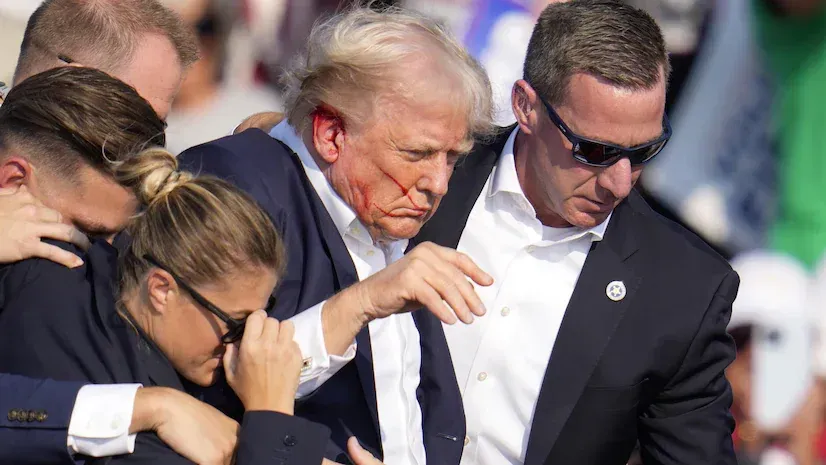
The Attempted Assassination of Donald Trump – A Colossal Security Failure
July 22, 2024

Elite assassin, complex plot or security failure?

Trump Photo: PTI - Business Standard


I am not a conspiracy theorist. Far from it. But I am inherently suspicious by nature and always try to look beyond the reported “facts” and dig deeper into what some might readily accept as obvious conclusions. 36 years in policing will do that to a person.


Full disclosure – I’m not a fan of Donald Trump. But as a former President he deserves proper US Secret Service protection.


I am old enough to remember the assassination of John F. Kennedy and the decades of conspiracies and hearings that followed. I thought about that controversy in the hours and days after a shot was fired at the former President in Pennsylvania last week. I also considered the experience gained through my years involved in hundreds of operations, including providing security to elected officials at all levels; the Royal Family; U.S. Presidents and other international leaders.


Yes, I am an armchair quarterback. That’s my current role. But I am one with years of experience in various capacities, including as a member of a tactical team; a military trained police sniper; a tactical team leader; and the Commander of all the OPP’s tactical resources in Ontario. I understand all the facets of operational planning – including command and control; contingency planning; resource deployment; communications; and on and on. I lived and breathed this stuff for many years of my career, at all levels. But what I saw occur on July 13th in Butler, Pa. was far from in-keeping with my expectations of the U.S. Secret Service.


I realize that the Secret Service cannot do it all. They do have overall responsibility for the security of the event and for the protection of the President however. The Agent in-Charge of the event determines where the inner perimeter begins and ends, and ensures the Secret Service is responsible for security within it.


But as you draw concentric circles and levels of security away from the President, they must rely on state and local police to supply various levels of protection, including lower-level tactical support; uniformed officer presence; and traffic control.  


‘Who does what’ and levels of accountability would be clearly delineated in the event’s Operational Plan, as well as reporting/communication channels established. The leaders of all the involved agencies would eventually sign-off on the final plan.


At any rate, in my view, a building with a largely flat roof and a clear view, 130 yards away from the stage where the President will be speaking, should be within the inner perimeter and under Secret Service control. The average deer hunter is able to shoot a man-sized target with a basic hunting rifle equipped with open sights at that range, so a person with a scoped rifle should be quite capable of striking a human head quite easily at that distance. That is not a location that should be staffed by local police from small-town USA. It should have been secured in a way that in which law enforcement would be on that roof – and not assassins.


Early reports indicate that some local officers were positioned inside that building, but I’m not sure what their role was. Others were reportedly on foot patrol in that area. None were on top of the building. Further reports suggest that local police were aware that there was a man with a gun trying to get on that roof for 20 minutes before shots were fired. What was communicated to the Secret Service at that point is still not publicly known.


Communication is always key and preferably all involved officers would be on the same radio channel, but the Command Centre would have personnel monitoring every police channel, real-time. The time between an officer at that site yelling “man with a gun” into their radio, to Secret Service rapidly moving the former President to safety, should be a matter of seconds.


I’m certain that Secret Service Standard Operating Procedures (SOPs) dictate that when an armed threat is perceived within the inner perimeter, agents must remove the President from the threat without hesitation. The President is no longer in charge, his protectors are. Their job is to get him low to the ground to minimize his target-profile and extract him as quickly as possible, including by force if necessary. He’d be given the “Bum’s Rush” so to speak.


When Ronald Reagan was shot on a street in Washington DC in 1981, there was no fanfare. He was shoved into a vehicle hard and fast, and the vehicle sped off. He wasn’t allowed to find his shoes. He didn’t get to stand completely upright for the shooter or another assailant to finish the job while pumping his fist triumphantly.


When shots were fired at Trump, he should have been treated the exact same way – down and out of danger. Very little was known at that point and there could have been multiple snipers carrying out a coordinated-fire attack. And it’s important to note that even if the agents knew with some certainty that there was only one shooter and he had been neutralized, they should never have allowed Trump to attain a fully upright and unprotected position, for a photo-op of him raising his fist in victory like he was guerilla leader Che Guevera.


About 30 seconds passed between agents getting him on his feet until he was off the stage. That is insanity and seemed to simply be contrived showmanship by a very slightly wounded former TV star.


During his speech to the RNC days later, Trump stated: “…felt something hit me really, really hard on my right ear”. The reality is that velocity of a 5.56 round should be just shy of 3000 feet per second, at 130 yards. But the bullet barely cut his ear and the wound didn’t even require stitches. Any real impact would have caused significant damage to his entire head that he would not have walked away from. Just the velocity of a high-powered rifle bullet passing so closely by his ear would normally cause immediate disorientation and temporary hearing impairment. The fact that we didn’t see that concerns me, but strange things happen that are unexplainable at times.


I also find it odd that Trump could be on a public stage less than a week later, giving a speech with his ear covered by a strange gauze pad that looked like a tiny pillow, versus a typical bandage. More showmanship?


I do not support the theory posed by some that this was an event staged by Republicans for election support purposes. My God, an innocent man was killed, and others injured. But I can see how some could perceive it that way, given the timing, the theatrics, the history of the players involved and the security failures.


I also don’t believe the other ridiculous allegations that Joe Biden tried to have his political rival killed. How stupid. I don’t think the 20-year-old assassin that failed in his assassination attempt was a member of Seal Team 6.


I am confident the FBI investigation into the event will tell us ‘who did what to whom and why’ over the coming weeks. I’m also certain that this was an epic failure by the Secret Service and some partner agencies.

Reporters keep asking me what the Secret Service needs to do differently to provide adequate protection to those they are sworn to protect. The answer is simple: They have been doing this for years and they have a ‘playbook’. Go back to the playbook. Do what you’ve always done. Follow your SOPs and contingency plans and training, but don’t be afraid to amend them as new challenges emerge. Exercise your plans regularly. Make sure all the checkboxes in the plan are ticked before the POTUS walks on stage. If there’s a location where you’re afraid a bad guy with a gun can shoot from – put a good guy with a gun there. If something bad happens, follow the playbook and get him/her out of danger, without stopping for a photo-op. Let other agents neutralize the threat.


Over the coming weeks, involved agencies will be forced to paint a more accurate picture of what went wrong. They’ve been pretty quiet so far. Some officials will undoubtedly lose their jobs and conspiracy theories will emerge and flourish every which way. Trump will continue to make hay with the fact that he was ‘wounded in action’.


But the bottom-line that emerges for me, as all the finger-pointing and theories unfold, is this: an innocent person died; a bad-guy died; others were wounded; security failed; and a former US President deserved much better protection.


By Chris Lewis February 13, 2026
I say "No."
By Chris Lewis February 11, 2026
Policing depends on public trust. So does police oversight. When either loses credibility, both suffer and the public they are sworn to serve isn’t sure who to believe or where to turn. In recent years, calls for stronger police oversight have grown louder, often driven by a small number of high-profile misconduct cases. Confidence in institutions by the public – often fueled by ridiculous social media theories and damnations, is more fragile than in the past, and reputational damage spreads faster. Despite the fact that Canadian police officers operate under tight legislative and regulatory frameworks that exceed any other Canadian profession in my view, existing oversight bodies feel pressure to take action quickly when bad things happen, as isolated as they may be. But there is a risk in this moment that deserves equal attention: the risk of overreach. The seven officers who have been alleged to have committed crimes – including serious ones that involve organized crime, must not be allowed to redefine an entire profession. Public trust certainly adds urgency to this moment. When corruption cases like this surface, the public does not necessarily see them as isolated failures. They see a system that is broken and in my view in this instance they see that unfairly. Policing is unlike most professions. There are over 70,000 police officers in Canada, comprised of federal, provincial and municipal officers that work under the worst of circumstances at times and face the harshest of critics. As a result of the arrests of seven serving Toronto Police Service (TPS) officers as well as a retired officer, then the subsequent suspension of two additional TPS officers and two Peel Regional Police Service officers, a large portion of the Canadian public are focusing on the ‘bad’ and forgetting the wonderful and brave police work occurring in their communities 24/7. Officers exercise coercive authority on the public on behalf of the public, often in volatile environments. They have right to take away people’s liberty and in the worst of situations to take lives. That authority most definitely demands the greatest of accountability, but it also demands reasonable, sensible and balanced oversight. Oversight systems designed around ‘worst-case scenarios’ risk governing by exception rather than thoughtful considerations and reality. One of the most overlooked consequences of overly broad oversight is its impact on ethical officers. When serious misconduct is identified, entire services face scrutiny and as a result of the Inspector General of Policing’s announcement to inspect all 45 police services in Ontario, the impacts are far reaching and not isolated to the police service of the members in question. The risk is that the resulting collective stigma will not only damage public trust but will also hurt officer morale; officer initiative may decline; recruiting could be impacted; and the reputation of the entire profession across Ontario will be damaged because of the alleged actions of a few. Oversight that blurs critical lines risks judging officers by association rather than their individual conduct. Officer trust in the oversight system and public trust in the policing profession could both be further harmed. As a result, both the Toronto Police Association and the Police Association of Ontario have rightfully expressed their concern regarding the inspection of all of Ontario’s police services. Their distress is that the announcement may be read by many that police corruption is rife across the province. At this point we do not know how much of this alleged criminal activity occurred off duty, versus on. We don’t know all the details of what they may have done and how, let alone what processes, policies or systems within the TPS that may have to be examined by the Inspector General. He may well have identified them all, but perhaps not. As the investigation portion by police continues, more things for inspection may be identified. In the meantime, I have no doubt that Ontario’s police Chiefs are reviewing their processes based on what they know so far, to ensure their policies, systems and internal oversight mechanisms are as tight as they can reasonably be. The seven charged officers are suspended and before the courts. The justice system is entrusted with dealing with these allegations from here. Others not charged but under investigation are suspended as well. There was no rush to begin a review process as this unfolds. Announcing that it will occur when the criminal investigation is complete and when they are armed with a more fulsome understanding of the issues that should be examined, would have been more appropriate. None of this lessens the need for accountability. It argues for thoughtful processes, analysis and reporting. Misconduct should be addressed decisively and dealt with through due process as it is, but broad oversight driven by isolated wrongdoings risks weakening the institutions we all depend on. Public trust matters. Undoubtedly. But so does institutional trust in police officers. In my view, processes that signal broad-based suspicion undermine the trust they are meant to protect. Oversight works best when it is firm, fair, and controlled.
By Chris Lewis February 7, 2026
Thursday’s announcement of the arrest of seven serving and one retired Toronto police officers for corruption, was a dark moment for policing in Canada and for the communities that trust their police to always do what is honest and right. At times like this it is too easy for us all to lose trust in those in which we should hold the highest level of trust in society, because of the actions of a few. I believe that we must remind ourselves about all that is good in policing in Canada – where training, standards, equipment, professionalism, governance and competence are second to none in the world. I view this as both bad news and good news stories. The bad news is that seven officers allegedly broke their oaths and committed heinous crimes. Startling, sad and completely unacceptable for the profession and more importantly for the public they were sworn to serve. The “good” news (although I struggle with the word) is that the system worked. Suspicions arose about a certain Toronto Police (TPS) officer’s potential involvement in a crime in York Region. Police there notified the Chief of the TPS, and they quickly agreed that York Regional Police (YRP) would lead the investigation, and TPS would remain in a support role by providing Professional Standards investigators and other assistance as required. I assume that would mean investigative support personnel and access to internal information about the TPS officers in question, like their schedules; what police cars they were driving; assignments and personnel file information, at minimum. By design, the TPS Chief did not have decision-making authority in the investigation. None of that raises any red flags for me. This was a large and complex investigation that eventually involved 400 officers and would require highly experienced investigators and specialty personnel. YRP and TPS have all of that and more. The leaders that addressed the media spoke competently and professionally, leaving no doubt that they would leave no stone unturned. Evidence was gathered and arrests of officers and others were made. The public was then appropriately advised of as many details as we have ever seen released in a media conference when charges were before the courts and an investigation ongoing. TPS Chief Demkiw announced he was seeking to suspend at least some of the officers without pay. That is something that has only recently became acceptable under Ontario’s policing regulations and must be used judiciously. Of course, social media “experts” and anti-police pundits took over from there. Please allow me to offer answers to some of the most consistent queries: Why wasn’t an independent oversight body like the Special Investigations Unit (SIU) brought on to investigate? Police shouldn’t investigate police! It’s not the legislated mandate of the SIU to conduct criminal investigations into police except in specific circumstances around police use of force or sexual assault. Nor is it the mandate of Ontario’s Inspectorate of Policing. These governing bodies do not possess the expertise or resources to conduct massive criminal investigations into officers and organized crime groups. Only large police services have the critical mass and knowledge to manage such difficult operations. An option for Chief Demkiw was to let his Professional Standards personnel be the liaison for TPS information and potential Police Act charges against TPS personnel that might emerge but leave the investigative support/assistance piece to another large outside service. That would’ve helped suppress any concern around TPS investigating their own. But police services often conduct criminal investigations into their own people with regularity in Ontario, unless they involve senior officers. There’s no hard and fast rule or Ministry guidelines on the issue to my knowledge. The Toronto Chief should step down. This happened under his watch. I cannot speak to his day-to-day job performance, but in my view, Chief Demkiw did not handle this case wrongly. The alleged illegal actions of 0.12% of his police personnel do not justify his removal. If he knew and didn’t take action that would be different but there is no suggestion of him doing anything but throwing his full support behind the YRP investigation. Again, perhaps he should’ve kept TPS out of it as much as possible, but that was a judgement call made in the early stages of an investigation that grew very large over time. All cops are corrupt. Why didn’t other officers stop them? What? This was seven officers in a police service of almost 6000 TPS officers and out of over 70,000 police officers in Canada. It is awful, without a doubt and concerning to say the least, but this does not mean there is a wave of police corruption and ties to organized crime across the nation. As this criminality unfolded and as we speak, thousands of officers are on the streets of Canada, saving lives and risking their own; patrolling communities; preventing crime and victimization; responding to life and death situations; arresting evil criminals and more. They do that professionally, bravely and honestly, or they are held to account under various laws and disciplinary processes. They are governed and regulated more than any other profession in Canada. Yes, some cops (even one is too many) out of those 70,000, commit crimes in their careers, which is unacceptable. Some of that occurs while they are on duty, some not. It is disappointing when it happens, but with rare exception police leaders will not accept it and will deal with it expeditiously through due process. In cases where a police supervisor or executive doesn’t take proper action, they will be held to account as well. As a rule, no one hates dirty cops more than honest cops. They hurt the profession as a whole across the continent. Canadian officers take a reputational hit regardless of where the wrongdoing occurs in North America. We don’t know the details yet of what these accused officers were doing or how much of it they were doing on the job, versus off duty. IF evidence comes to light in the ongoing investigation that colleague officers knew or participated in any way in the criminality, they will be in trouble as well. Let’s not jump to conclusions that other officers “must have known” and let the investigation run its course. Why do officers not have more oversight on the use of police databases? Police officers and a number of civilian colleagues have access to the Ministry of Transportation (MTO) database that holds all licenced driver and vehicle registration information in Ontario. Most police cars have computers in them that can access that information, which includes driver’s and owners’ addresses. It is accessed non-stop, 24/7, as a regular part of core police business. Other databases involving outstanding warrants and criminal history, as well as occurrence records are similarly accessed. Government employees that work at MTO or in some other Ministries have like access to people’s names and addresses. That is reality in all 10 provinces. We cannot limit legitimate government employee access to vital systems on the off chance they may be inappropriately used. That includes those that we entrust to carry guns and make life and death decisions. When such databases are misused in some way, proper action must be taken promptly, as it was in this case, as opposed to hamstringing the operability of several hundred thousand honest employees across Canada. Canadian police officers are internationally highly-regarded, but they are human, have frailties and will honestly err on occasion while truly trying to do their best. That can be dealt with and repaired when it occurs. But when officers commit acts of malice, they will be appropriately held accountable and dealt with through due process. That is the bedrock of Canadian policing. Public trust in police is paramount to effective policing, and largely we enjoy that in our country. We cannot let this dark day define what policing actually is in Toronto or anywhere in Canada. Canadians should move forward with confidence that the system did work in this case. Those that violated our trust are before the courts. The vast, vast majority of officers that are still out there bravely doing what they do so well, will never let us down. Please give them a chance.