If You Snooze You Lose
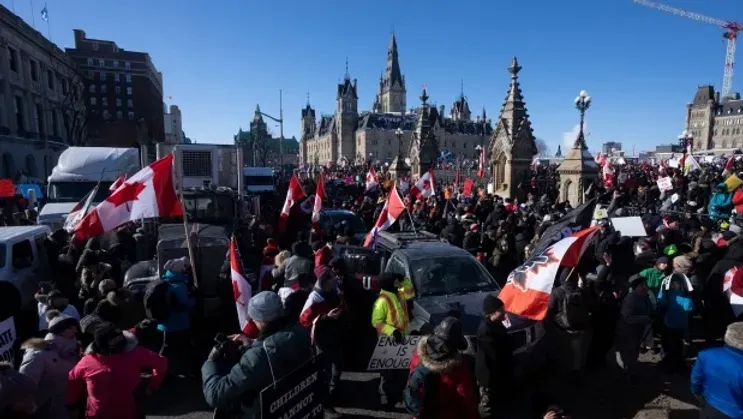
Photo: Ottawa CTV
The ongoing protest by truckers and more in our nation’s capital is a perfect storm that is being managed by police agencies who had no part in the underlying political decisions that led to this quagmire. Nor can police negotiate a solution to the border crossing Covid protocol concerns raised by the truckers. For the most part the federal government is the lead body – with some linkages to provincial health ministries, but the focus of the protest is in Ottawa for a reason: because the participants want answers and action from the feds.
From a public security perspective, the Ottawa Police Service and the RCMP are the lead agencies and are supported by several partner agencies. It’s not their first rodeo and they have a robust security plan in place. Although they will be criticized for everything they do and everything they don’t, in my view they’ve handled this very well to this point. Although the protest has been “relatively” peaceful – in that there hasn’t been rioting, looting, fires etc., as we have seen in a number of massive protests around North America over the past several years. There have been some incidents of concern occur of course, including the infantile, disturbing and unacceptable desecration of national memorials and monuments; racial emblems were exhibited; homeless shelter volunteers were intimidated; aggressive threats were voiced, harassment and beer cans hurled at journalists and more. Much of that may well have not been perpetrated by the truckers’ group in fairness, but by hangers-on that have no valid concerns but appear at every protest just to cause problems for authorities.
From a public security perspective, the Ottawa Police Service and the RCMP are the lead agencies and are supported by several partner agencies. It’s not their first rodeo and they have a robust security plan in place. Although they will be criticized for everything they do and everything they don’t, in my view they’ve handled this very well to this point. Although the protest has been “relatively” peaceful – in that there hasn’t been rioting, looting, fires etc., as we have seen in a number of massive protests around North America over the past several years. There have been some incidents of concern occur of course, including the infantile, disturbing and unacceptable desecration of national memorials and monuments; racial emblems were exhibited; homeless shelter volunteers were intimidated; aggressive threats were voiced, harassment and beer cans hurled at journalists and more. Much of that may well have not been perpetrated by the truckers’ group in fairness, but by hangers-on that have no valid concerns but appear at every protest just to cause problems for authorities.
So, what happens next? Well from a “leadership” perspective, in good times AND in bad the people need to hear from their leaders and not in a partisan way that simply criticizes the comments and action of opposition entities. We have heard some messaging from the federal Conservative Party Leader – who met with at least some protest organizers, which to many seemed like an endorsement of their action. Provincially, the Premier and Solicitor General have made some comments that were critical of the apparent illegalities that have occurred and the protest’s impacts on the community. An Independent Provincial MPP participated in the protest and was inflammatory in my view when he made disgraceful comments about opening the security barricades in support of the protestors. Even former U.S. President Donald Trump, who supported those he called “Patriots” that violently attacked Congress on January 6, 2021, has jumped into the fray, also supporting the protest in our capital. He was nauseating of course, but at least he said something. However, so far in these worst of times, leader numero uno has been asleep at the switch.
I get that two of the Trudeau children have Covid. That’s unfortunate and scary at minimum and I hope the children quickly recover to good health. At the same time the PM reports that he has now tested positive but apparently is “feeling fine”. Of course, he must obey isolation protocols, but can quite easily communicate through video and tele-conferences.
Then finally at noon today, our Prime Minister popped out of his undisclosed groundhog hole (2 days early I might add) and spoke well as he often does, staring into the camera and speaking with empathy about how hard the pandemic has been on Canadians. He also referenced some of the hateful acts committed in Ottawa over the weekend, and thanked Canada’s truckers for their gargantuan efforts (until last week) to fulfill our supply chain needs, but did not address any plans to mitigate this ongoing protest fiasco. Despite questions from reporters, we did not hear anything about his strategy or action plans.
I believe Canadians (especially Ottawa residents) wanted to hear that “they’ve made their point; awareness has been raised and dialogue continues; but enough is enough.” And perhaps truckers should have heard that “current vaccine cross-border protocols will be re-evaluated in concert with real-time health/scientific risk assessments, and modified if deemed appropriate.” He needed to explain that lives are at risk and taxpayers are paying the better part of a million dollars a day for the security piece alone. He needed to reassure the electorate in a firm and decisive way that the situation is being dealt with; there is a plan in place; and we will get through this, together.
As fictional TV football (soccer) coach Ted Lasso said so well: “There’s two buttons I never like to hit: that’s panic and snooze.”[1] I agree and sometimes it’s a delicate balance.
Well Mr. PM, it’s not necessarily time to panic yet, but we’re 3 days in and this short break from snoozing isn’t enough.[1]
People Magazine: 21 of the Best Inspirational Quotes from Ted Lasso, https://people.com/tv/ted-lasso inspirational-quotes/ October 07, 2021